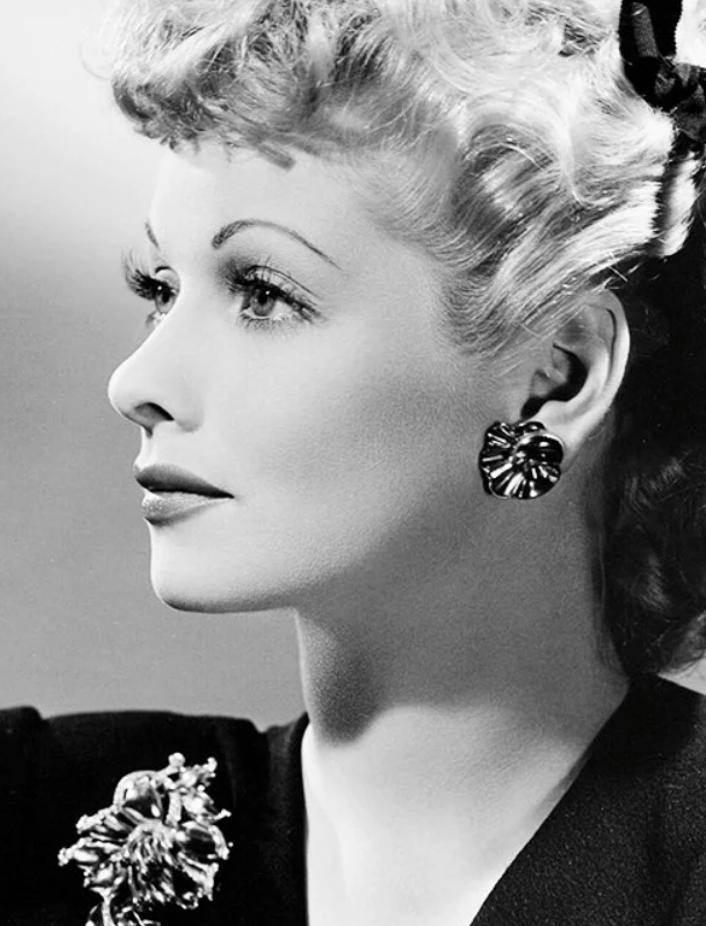
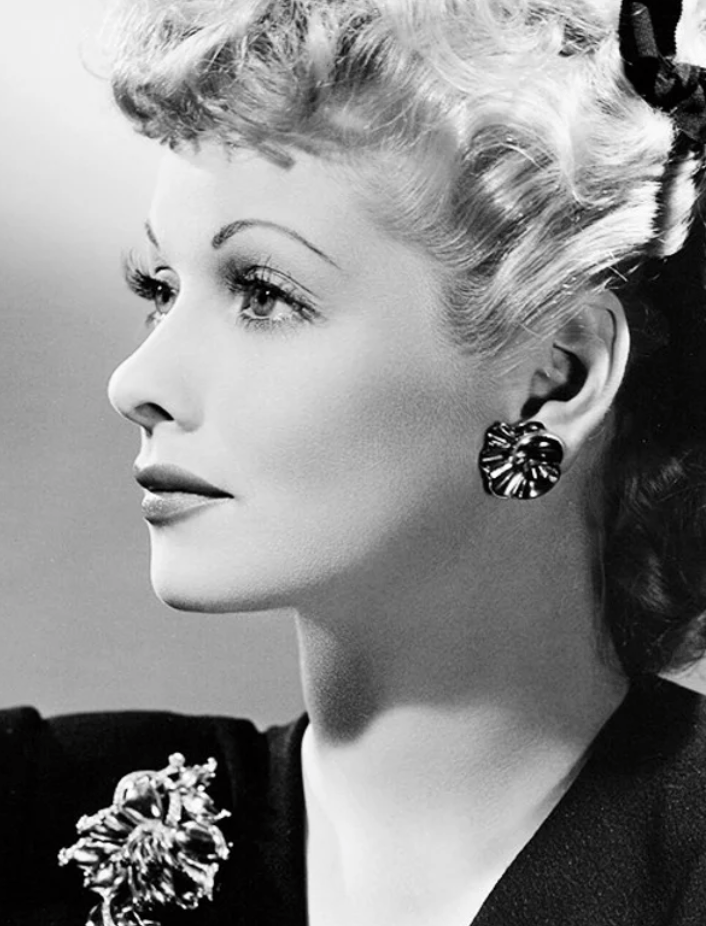
In recent years we have witnessed some of the most talented female comedians. They are breaking boundaries and opening doors. Amy Schumer is the first woman to ever make Forbes list of top-paid comedians, the movie Girls Trip, starring comedian Tiffany Haddish made over $100 million at the Box office, and Tiffany Haddish career hasn’t slowed down since. These two women are not alone, the success of women in comedy is growing and one woman we should look back at and thank is Lucille Ball. Throughout her career, she changed how women were looked at not only comedy but as well as the entire entertainment industry.
Lucille Ball is widely known for her show “I Love Lucy” starring herself and her husband Desi Arnaz but before her beloved show became a success Ball started her career on the radio.
By Hollywood’s standard Ball started her career late in life. As her film career was slowing down in 1947 she teamed up with CBS for a role on a radio show, “My Favorite Husband” which became a huge hit on CBS that turned into I love Lucy. I Love Lucy was a major success for CBS, Ball and Arnaz, the TV industry and commercial sponsors and TV manufacturers. On April 7, 1952, about 30-40 million viewers were tuning into I Love Lucy and it was the first time in history that a television show had reach so many people. They signed a two-and-a-half-year contract for eight million with Philip Moris and CBS which was the largest contract ever written for television series.
In My Favorite Husband, her radio husband was Richard Denning. Ball told CBS she wouldn’t do the show unless Arnaz played her husband. She had to fight the network to get him on the show. It was one of the most important relationships on the show because at the time it showed an interracial relationship. We are now seeing more interracial relationships on televisions and it is becoming more normalized with movies such as “Something New” starring Sanaa Lathan and Simon Baker or “Our family Wedding” starring Lance Gross and America Ferrera.
It is no secret that in many sitcoms real pregnancies are now written into the show. It is common for an actress to work up until the last couple months of her pregnancy. Emily Deschanel worked during both of pregnancies while filming Bones writers wrote them into the show both times, and only had to wear a fake belly for a few episodes. Alyson Hannigan from How I Met Your Mother also filmed during both her pregnancies with her second pregnancy timing up perfectly with her character. As common as actresses appearing on television might be now there was a time where it was unheard of.
During her career on the ” I Love Lucy” show, Ball became the first pregnant woman on television. Although the word pregnant was not allowed to be used it was still an influential moment. The “I Love Lucy Show” is known to be the creator of reruns. When Ball was pregnant Arnaz suggested re-airing the same episodes from the first seasons for Ball to have time to rest. The show was also one of the first to be filmed in Hollywood while most shows were filmed in New York and to be filmed with three cameras instead of one. Arnaz and Ball used the “I Love Lucy” reruns they owned and sold the syndication rights to the first 180 episodes back to CBS for $5 million. The show is known globally and can be seen in 80 countries, and has been dubbed into 22 languages.
Lucille ball never followed the conventional route. She made the choice to have children later in life. Ball and Arnaz first child was born when she was 40 with her second child coming two years later. We are now seeing a trend of women having babies later in life; making Ball a pioneer of her time.
GQ annual comedy issue for 2018 cover featured Kate McKinnon, Issa Rae, and Sarah Silverman. Despite the mistakes that were made their goals was to celebrate who they call the funniest humans they know. The magazine did feature stories on all three female comedies and without saying women in comedy. This a huge step in saying they’re the best at their jobs without adding in gender. Before there was GQ there was TV Guide and Lucille Ball had the honor of gracing the very first cover. Throughout her career Ball had over 30 TV guide covers more than any other celebrity.
I Love Lucy ended in 1957 but Ball’s career kept flourishing with many more TV shows; The Lucy-Desi Comedy Hour, The Lucy Show (1962-1968), Here’s Lucy, and Life with Lucy. She also didn’t stop making movies and had a lead role in Wildcats a Broadway production. Ball has received numerous awards throughout her career. She has won four Emmy awards; in 1952 for Best Comedienne and Best Actress in Continuing Performance, in 1955 for I love Lucy, and Outstanding Continuing Performance by an actress in a leading role in a Comedy Series, and in 1967 and 1968 for The Lucy Show. Ball received a Lifetime Achievement Citation from the Kennedy Center for the performing arts in 1986, honored with the Presidential medal of freedom in 1989, and was the first woman who was inducted into the National Women’s Hall of Fame in 2001. The National Women’s Hall of Fame notes that Ball is one of the most beloved comedians of all times. Her talents extended beyond the realm of comedy. Her role as the president of Desilu Productions broke the glass ceiling for woman executives in the film and television industry and her shows live on in syndication. In 1989 she was awarded the Presidential Medal of freedom. While many of today’s comediennes and actresses still see her as a mentor.
As of 2017, there are 17 actresses who have started their own production companies. These women have decided to start a path of their own and take some control behind the scenes. These women include Charlie Theron, Drew Barrymore, Eva Longoria, Kerry Washington, and Reese Witherspoon, who was told by her mother If you want something done, Do it yourself. she wanted to open up doors for women both on and off screen. The person to have the honor to be the first woman to run a major production company was Lucille Ball. Ball and Desi Arnaz were the confounders of the production company Desilu. After I love Lucy and she divorced from Desi Arnaz, she bought Arnaz out of the company. She paid 2.5 million for his shares to become the first CEO for a major television and movie production company. The company produced a variety of hits such as Star Trek, Mission impossible, The Dick Van Dyke Show, The Andy Griffin Show, and My Three Sons.
In Jamestown, New York hometown of Lucille Ball, you can find the “Lucille Ball and Desi Arnaz Museum” that proudly celebrates their memory and legacy. Jamestown is also the new home of National Comedy Center. It is a non-profit center which opened this month was inspired by Lucille Ball, who envisioned a place where comedy would be celebrated as an art form. The Lucille Ball Comedy Festival is additionally celebrated in Jamestown. Amy Schumer performed two shows and Fran Dresher held a conversation during the festival this year.
Fran Dresher reflects on Lucille Ball and what she and her show presented to the world. Dresher states how Ball wasn’t afraid to be sexy or glamorous and really started that on TV for women. Lucy could manipulate her man and you knew, in the end, they were going to be okay, but you watch to see how she was going to get her way. Dresher continues by saying how her character was so grounded, so human, and so real and when she bought something; clothes she couldn’t afford she wouldn’t ask her husband for permission. She did what she wanted, and women could relate, and it made her a feminist, and her own person.
When we see shows like Scandal we need to remember Lucille Ball showed us an interracial relationship first (Kerry Washington and Tony Goldwyn), women can be producers (Shonda Rhimes), and it’s okay to show pregnancies and say the word pregnant on Tv (Katie Lowes).
Scandal was possible because of Lucille Ball. Lucille Ball has paved the wave for some of our favorite female comedians in the industry such as Iliza Shlesinger, Melissa Mcarthy, and Maya Rudolph. CNN credits Ball as one the 50 people and teams who changed American comedy. They celebrate her as “The first woman to run a production company. The first woman to star in an interracial relationship on TV. One of the first woman to show her real pregnancy on TV. Lucille Ball’s dynamite influence both on screen and behind the scenes of comedy television reshaped the genre for decades to come particularly for women.”


Leave a Reply